










Neck Pain Treatment in Chiswick
In short Neck pain is very common and usually improves with the right advice, movement and exercise. At Chiswick Green Physiotherapy we find out what is driving your symptoms, help ease your pain and build the strength and movement you need to stop it returning. You can book directly without a GP referral.
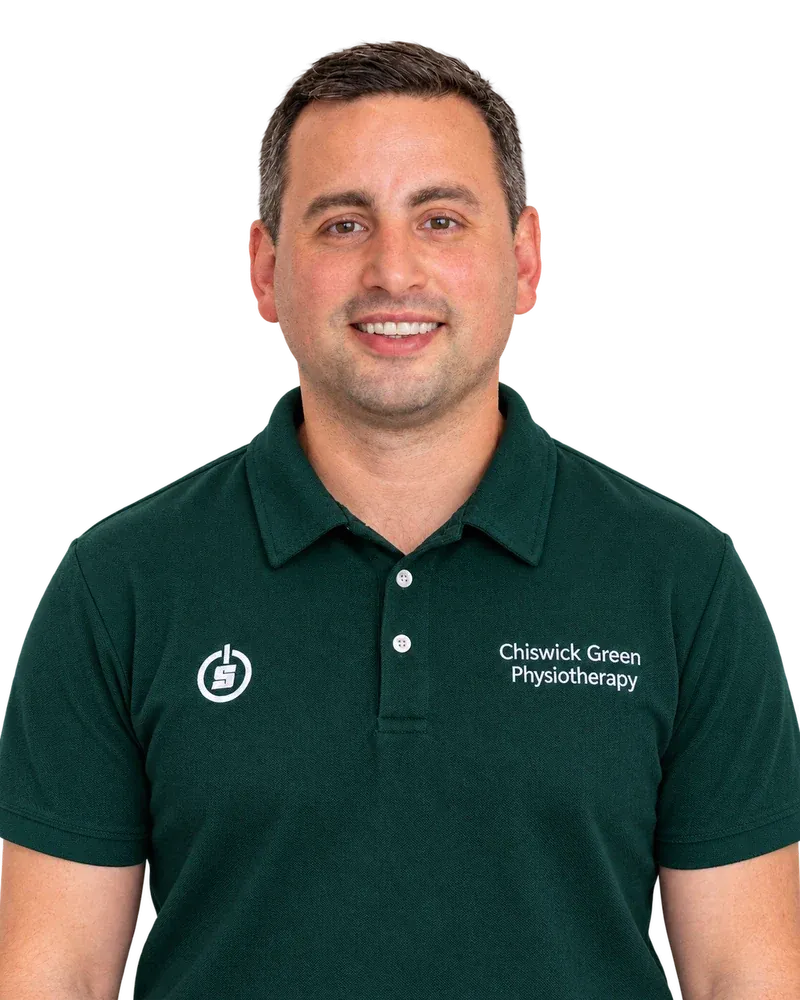
Clinically reviewed by Patrick Kenny, Clinical Director and Sonographer, HCPC PH106536
Is neck pain wearing you down?
Do you finish your working day with a stiff, aching neck? Are you struggling to check your blind spot when driving, or waking up with pain after a restless night?
Neck pain can creep into every part of your day. You might notice tension building across your shoulders at your desk, headaches that start at the base of your skull, or a sharp catch when you turn your head. It can be tiring and frustrating, and it is easy to start holding yourself stiffly to protect it. The good news is that most neck pain responds well to the right care.
What is neck pain?
Neck pain is pain, stiffness or discomfort in the area between the base of your skull and the top of your shoulders. Most neck pain is non-specific, which means it is not caused by a serious problem, even though it can feel very uncomfortable.
Your neck is a strong and flexible part of your spine, made up of seven small vertebrae, discs, joints, muscles and nerves. These structures can become sensitive when they are under more strain than usual, or when they have not been moving as much as they need to.
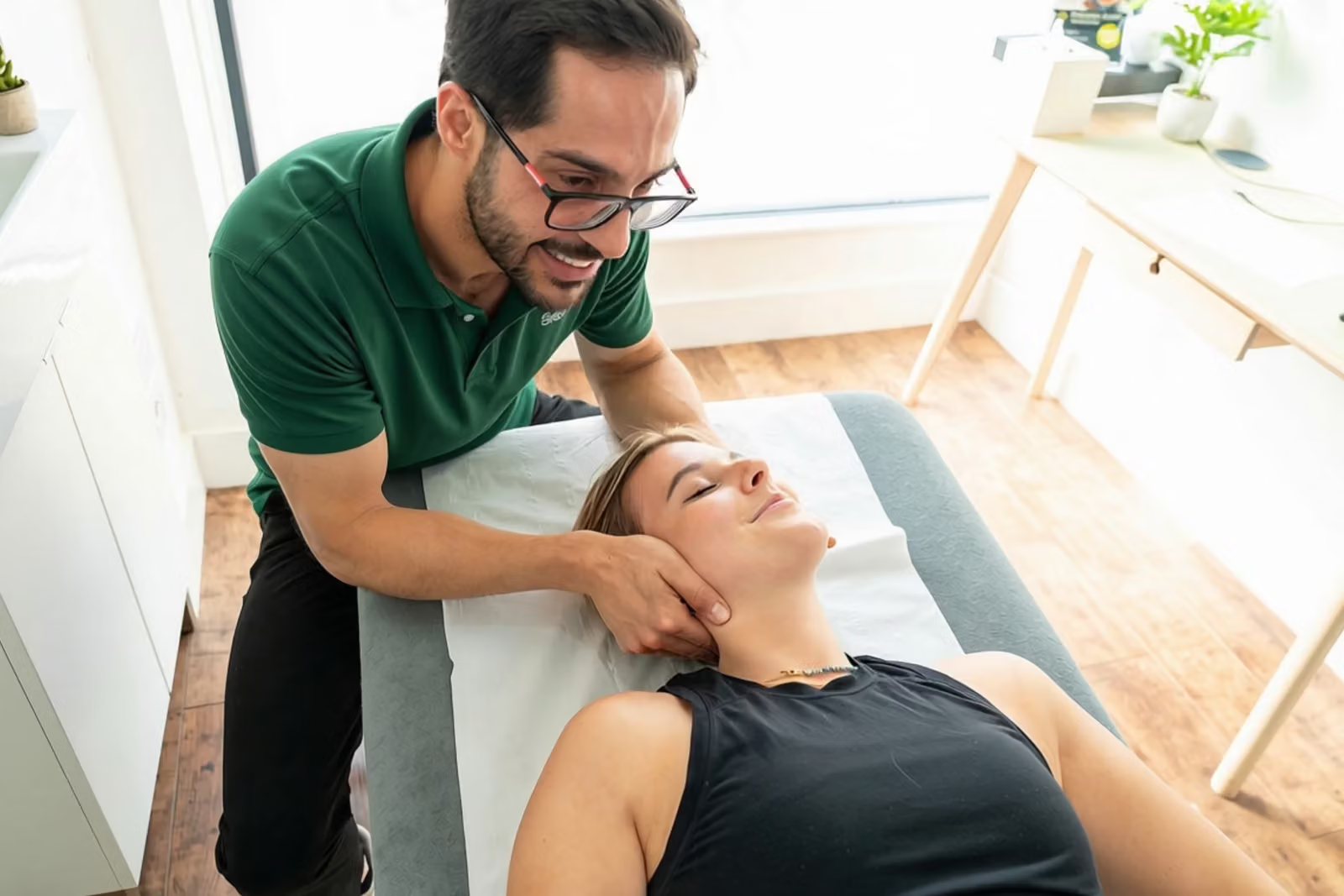
Symptoms of neck pain
Common symptoms include:
- Stiffness and difficulty turning or tilting your head
- A dull ache or tightness in the neck and upper shoulders
- Sharp pain with certain movements
- Headaches that start at the back of the head
- Pain, pins and needles or numbness spreading into the arm
Some people also notice their neck feels worse after long periods looking at a screen, reading or driving. If your neck pain links with pain around the shoulder blade or arm, our shoulder pain page may also be helpful.
What causes neck pain?
Neck pain often builds from a mix of everyday factors rather than one injury. These can include:
- Long periods in one position, such as working at a laptop or looking down at a phone
- Sleeping in an awkward position or on an unsupportive pillow
- A sudden movement or minor strain
- Whiplash after a car accident or sporting collision
- Age-related changes in the joints and discs, which are very common and often painless
- Stress and tension, which can increase muscle tightness and sensitivity
Posture alone is rarely the full story. Moving regularly and building strength usually matter more than holding a "perfect" position.
When to get urgent help
Most neck pain is not serious, but some symptoms need medical attention straight away.
Call 999 or go to A&E if you have neck pain with:
- A sudden, severe headache unlike any you have had before
- Signs of a stroke, such as facial drooping, arm weakness or slurred speech
- Neck pain after a significant fall, car accident or blow to the head
- Chest pain, or pain spreading into your left arm or jaw
- A high temperature with a stiff neck and a rash or sensitivity to light
Speak to your GP urgently, or call NHS 111, if you have neck pain with increasing weakness in your arms, problems with balance or co-ordination, difficulty with fine hand movements, fever, unexplained weight loss or a history of cancer.

How we treat neck pain
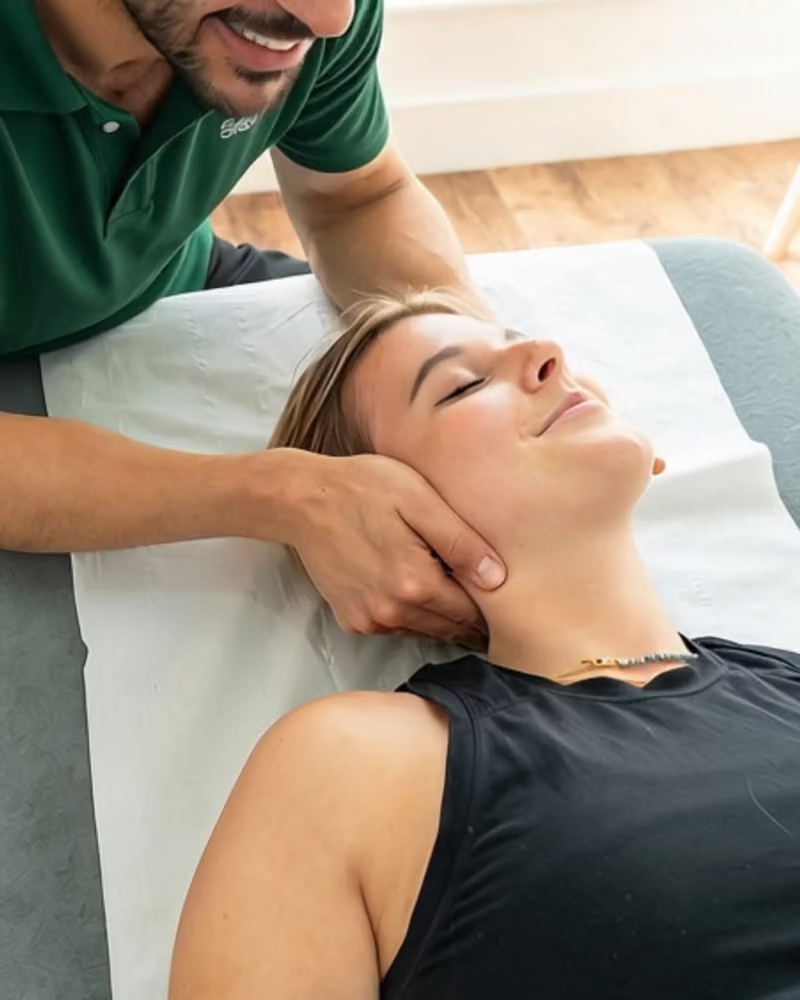
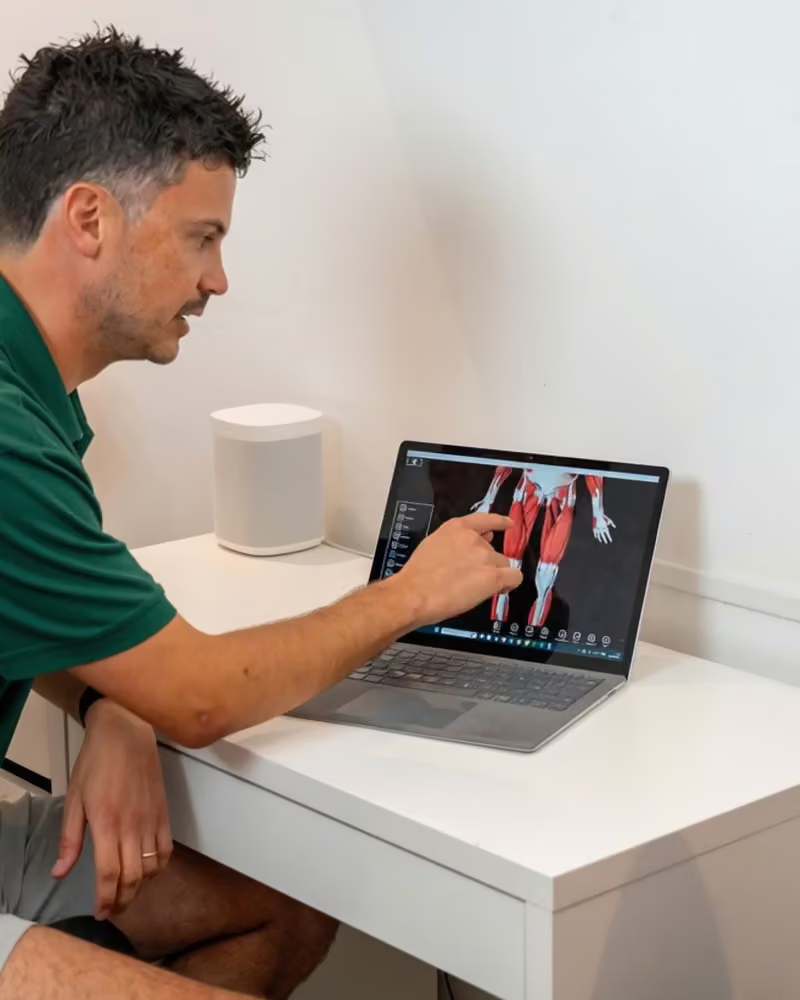
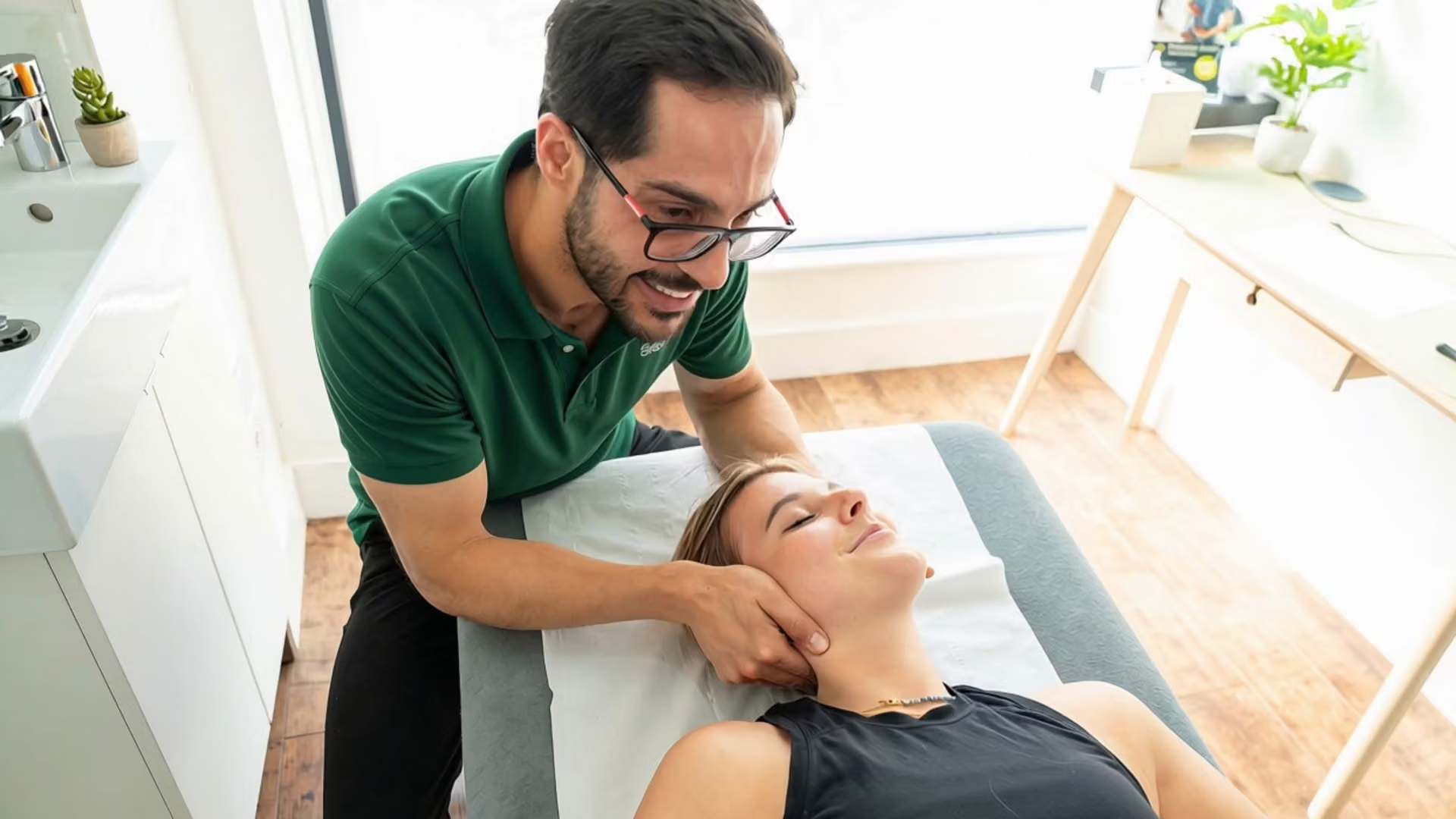
We treat neck pain by understanding what is driving your symptoms and building a plan around your daily life. Your first appointment includes a detailed conversation and a physical assessment of how your neck, upper back and shoulders move.
We follow our Recover, Rebuild and Thrive philosophy:
- Recover. We help ease pain and stiffness with advice, hands-on treatment, soft tissue work and gentle exercise. Some patients also benefit from clinical massage or dry needling as part of their care.
- Rebuild. We strengthen the muscles that support your neck and upper back, and improve how well you tolerate long days at a desk or behind the wheel.
- Thrive. We help you return to the activities you value and stay on top of your symptoms, often through continued exercise in our gym.
Our physiotherapy appointments include exercises sent to you through our exercise software, with videos so you can carry on at home with confidence.
How long does neck pain take to recover?
Many people with new neck pain notice an improvement within a few days to a few weeks. Pain that has been around for longer, or that involves the nerves in your arm, can take more time.
Your recovery depends on your symptoms, your general health and the demands of your work and lifestyle. After your assessment we will explain what to expect and review your progress at each stage. We cannot promise a fixed timescale, but we will be clear and honest with you throughout.
Who you will see
You will be seen by one of our HCPC-registered physiotherapists. Our team includes Patrick Kenny, Owner and Clinical Director, with over 15 years of clinical experience, and Senior Physiotherapists Leah Hanson and Jess Vernon.
Every clinician is employed by the clinic and spends at least three hours a week on training. We are based at 76-77 South Parade, Chiswick (opens in a new tab), a short walk from Chiswick Park and Turnham Green stations. An initial physiotherapy assessment costs £99 for 60 minutes, with follow-up sessions from £79.
- Patrick Kenny Clinical Director and Sonographer
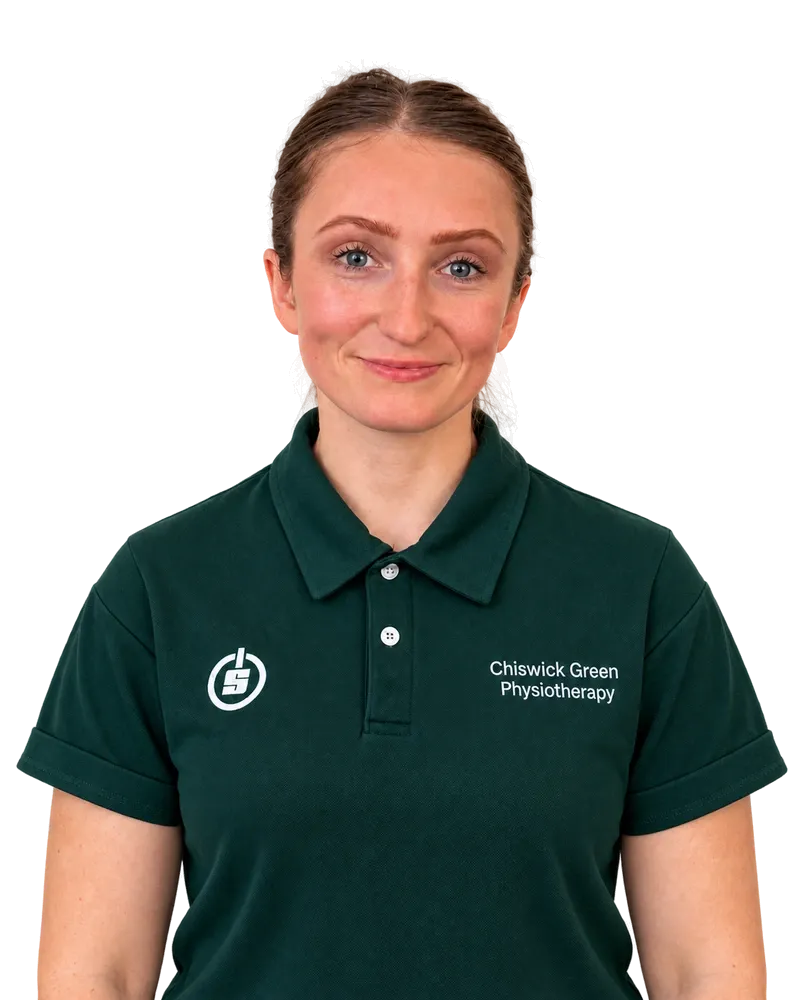 Leah Hanson Senior Physiotherapist and Pilates Instructor
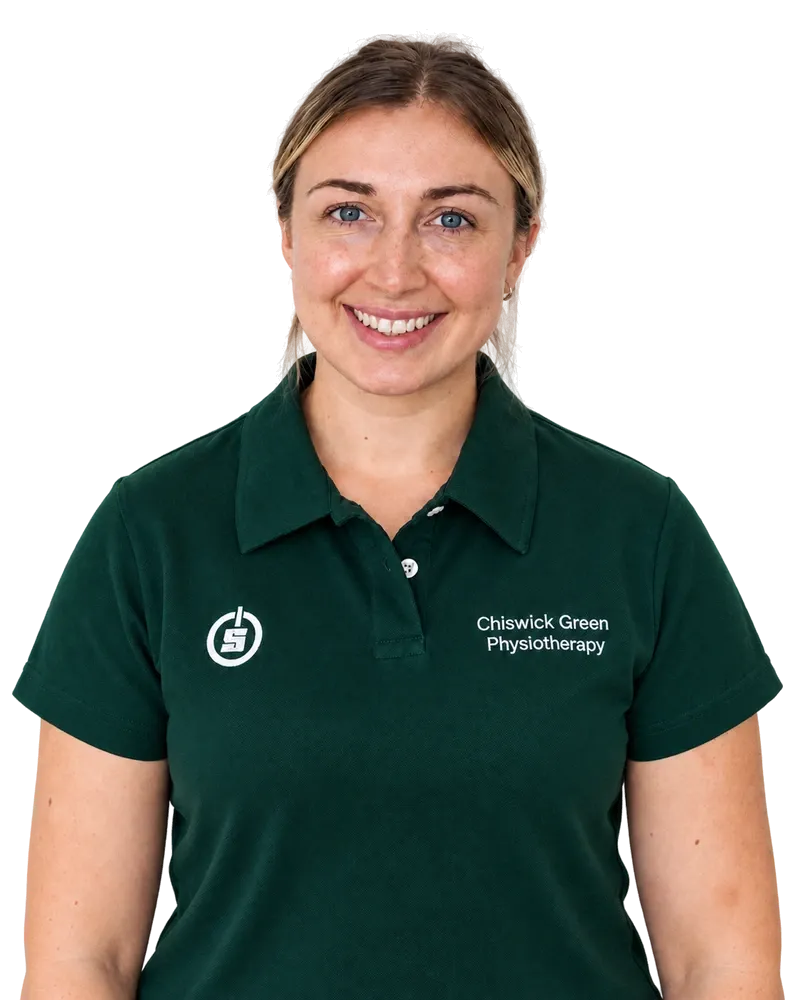 Jessica Vernon Senior Physiotherapist and Pilates Instructor
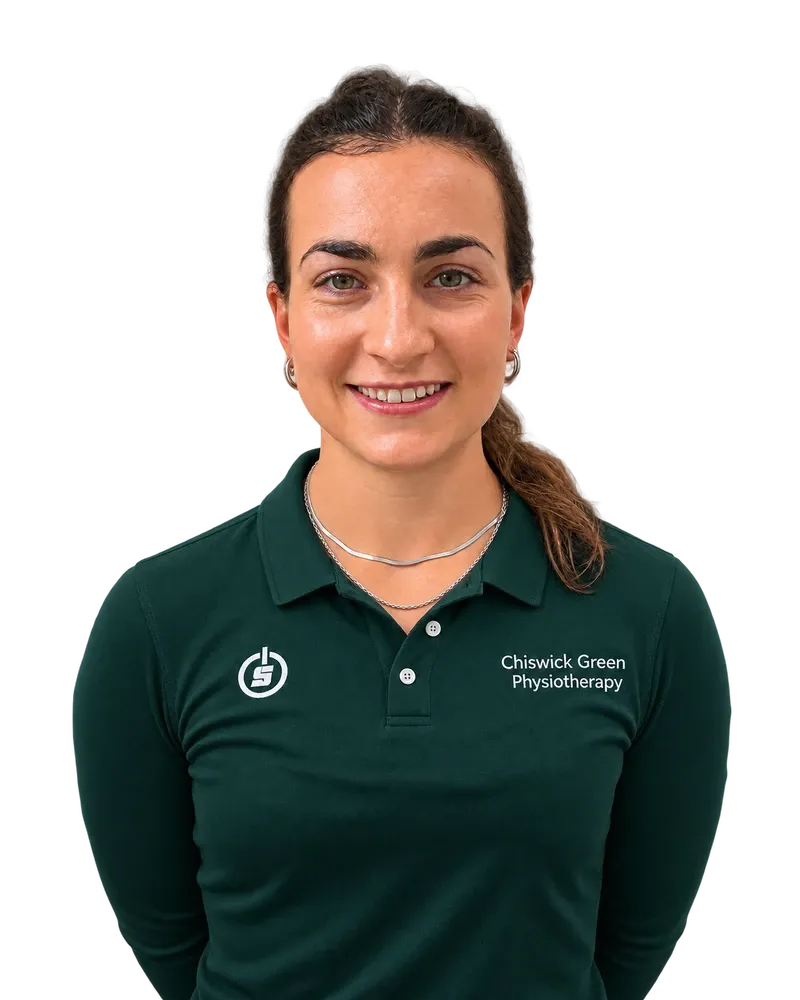 Daisy Faithfull Physiotherapist
 Izzy Stanger Massage Therapist and Personal Trainer
 Josh Tills Massage Therapist and Personal Trainer
 Blair McAulay Massage Therapist and Personal Trainer
Yes. Some headaches, known as cervicogenic headaches, come from the neck. We can assess whether your neck is contributing to your headaches and advise you if a GP review is needed.
For most neck pain, a collar is not recommended because keeping your neck moving gently tends to help it recover. If you have had a serious injury, follow the advice of your medical team.
There is no single best position. A pillow that keeps your head roughly level with your body often helps. We can give you practical advice based on how you sleep and what eases your symptoms.
Long periods in one position can contribute to neck pain. Small changes to your screen height and regular movement breaks often help, alongside exercises to build strength and tolerance.
No, you can book directly with us. If you are using health insurance, check whether your insurer needs a referral or authorisation before your first appointment.
Ready to turn your head without wincing? Book online or call 020 3813 0114 to arrange your neck pain assessment in Chiswick.